Updating kitchen cabinets is an effective way to refresh a Portland home without committing to a complete kitchen renovation. However, DIY cabinet painting often produces disappointing results when homeowners underestimate the preparation, materials, and application techniques required. Portland’s damp climate, frequent kitchen use, and the variety of cabinet materials found in older homes can make achieving a smooth, durable finish particularly challenging.
Problems such as peeling paint, visible brush marks, uneven coverage, and sticky cabinet doors can affect both appearance and functionality. Although some mistakes may seem easy to correct, cabinet surfaces require specialized coatings and careful preparation. Understanding common DIY cabinet painting problems can help Portland homeowners recognize when professional cabinet painting is the better solution.
1. Peeling and Chipping Cabinet Paint
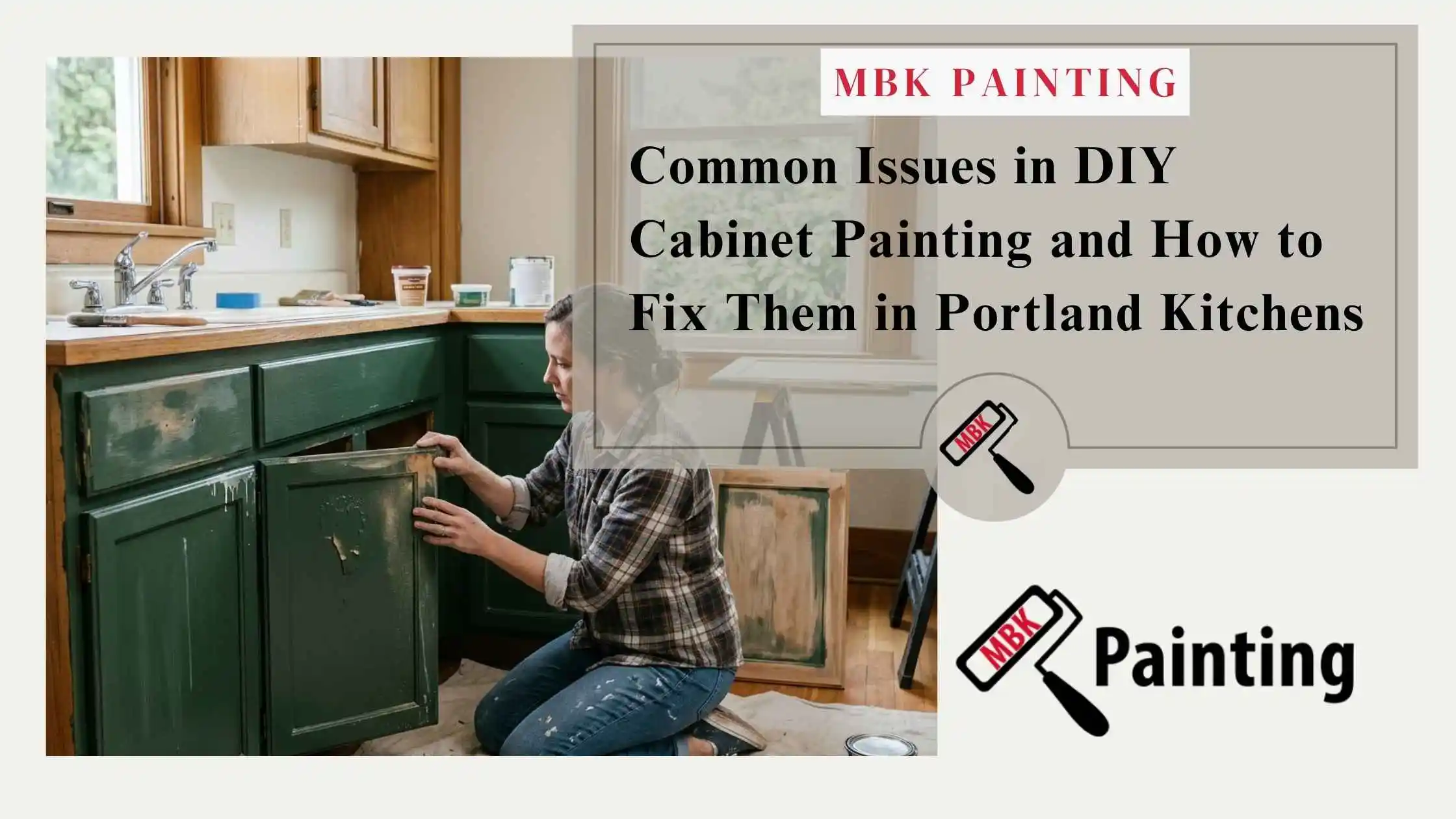
Peeling and chipping are among the most frustrating problems homeowners encounter after painting kitchen cabinets. The paint may initially look attractive but begin separating around cabinet edges, handles, and frequently touched areas.
This usually happens because the original surface was not properly cleaned, sanded, or primed. Kitchen cabinets accumulate cooking grease, oils, food residue, and cleaning-product buildup. Applying paint over these contaminants prevents proper adhesion.
Portland’s changing indoor humidity conditions can also influence how coatings dry and perform, making appropriate preparation important.
Professional solution: The affected coating must be evaluated and loose paint removed. Professionals identify the existing cabinet material, clean the surfaces thoroughly, and select compatible primers and durable cabinet coatings. MBK Painting uses a preparation process that includes sanding, priming, and applying coatings designed to resist everyday wear, chipping, and peeling.
2. Visible Brush Marks and Roller Streaks
Another common DIY cabinet painting issue is an uneven finish caused by visible brush strokes and roller marks. Unlike ordinary walls, kitchen cabinet doors have prominent flat panels, edges, and detailed surfaces where application imperfections can become noticeable.
Using the wrong brush, applying excessive paint, or failing to maintain consistent application techniques can leave an inconsistent appearance.
Professional solution: Professional painters use appropriate application equipment and controlled techniques to achieve smooth, even coverage. MBK Painting emphasizes precision and high-quality materials to produce streak-free finishes with a polished appearance.
3. Uneven Paint Coverage and Color Differences
Uneven coverage can make kitchen cabinets look unfinished, particularly when homeowners change from dark wood tones to lighter colors. Some areas may appear darker than others, while corners, edges, and recessed panels may receive insufficient paint.
This problem often results from inconsistent application, inadequate priming, or choosing products that are not suitable for the existing cabinet material.
Older Portland homes may have cabinets with previous stains, varnishes, or multiple coating layers, creating additional challenges when changing colors.
Professional solution: A professional painting team evaluates the existing finish and determines the appropriate primer and coating system. Careful preparation and consistent application help achieve uniform color throughout cabinet doors, drawer fronts, and frames.
4. Sticky Cabinet Doors and Drawers
Cabinet doors that stick together after painting are another common DIY frustration. Homeowners may finish painting and reinstall everything before the coating has dried or cured sufficiently.
Cabinet doors and drawer fronts frequently touch surrounding surfaces. If the paint remains soft, these contact points can cause sticking, surface damage, and visible marks.
Applying excessively thick coats can make the problem worse.
Professional solution: Professional painters follow product-specific drying and curing requirements. They also account for coating thickness, application conditions, and cabinet construction to reduce contact-related damage. Proper scheduling allows the finish to develop the durability needed for everyday kitchen use.
5. Poor Preparation and Rough Cabinet Surfaces
Cabinet painting requires much more preparation than many homeowners expect. Skipping cleaning, sanding, or surface repairs can leave visible imperfections beneath the new coating.
Dust, grease, scratches, dents, and old finish residue can prevent paint from bonding correctly. Even when the final color looks attractive, these underlying problems may affect the finished appearance and durability.
Professional solution: MBK Painting follows a thorough surface preparation process before applying cabinet coatings. Its professional painters sand, prime, and prepare cabinet surfaces to create a suitable foundation for a smooth, durable finish.
This is particularly important for older Portland kitchens where years of cooking and daily use may have left accumulated grease and surface wear.
6. Using the Wrong Paint for Kitchen Cabinets
One major DIY mistake is assuming that ordinary wall paint or standard trim paint will perform well on kitchen cabinets.
Cabinets experience frequent handling, cleaning, moisture exposure, and contact with household items. Their coating needs to withstand more physical wear than many ordinary interior surfaces.
Using an unsuitable product can result in premature chipping, scratching, or poor adhesion.
Professional solution: Cabinet painting requires coatings specifically designed for cabinetry. MBK Painting uses specially ordered Renner cabinet products rather than relying on standard trim paint. These specialized coatings are selected to support a durable, professional finish suitable for cabinet surfaces.
Choosing the correct product is especially important when homeowners want a long-lasting kitchen update rather than a temporary cosmetic improvement.
7. A Portland Kitchen Cabinet Transformation
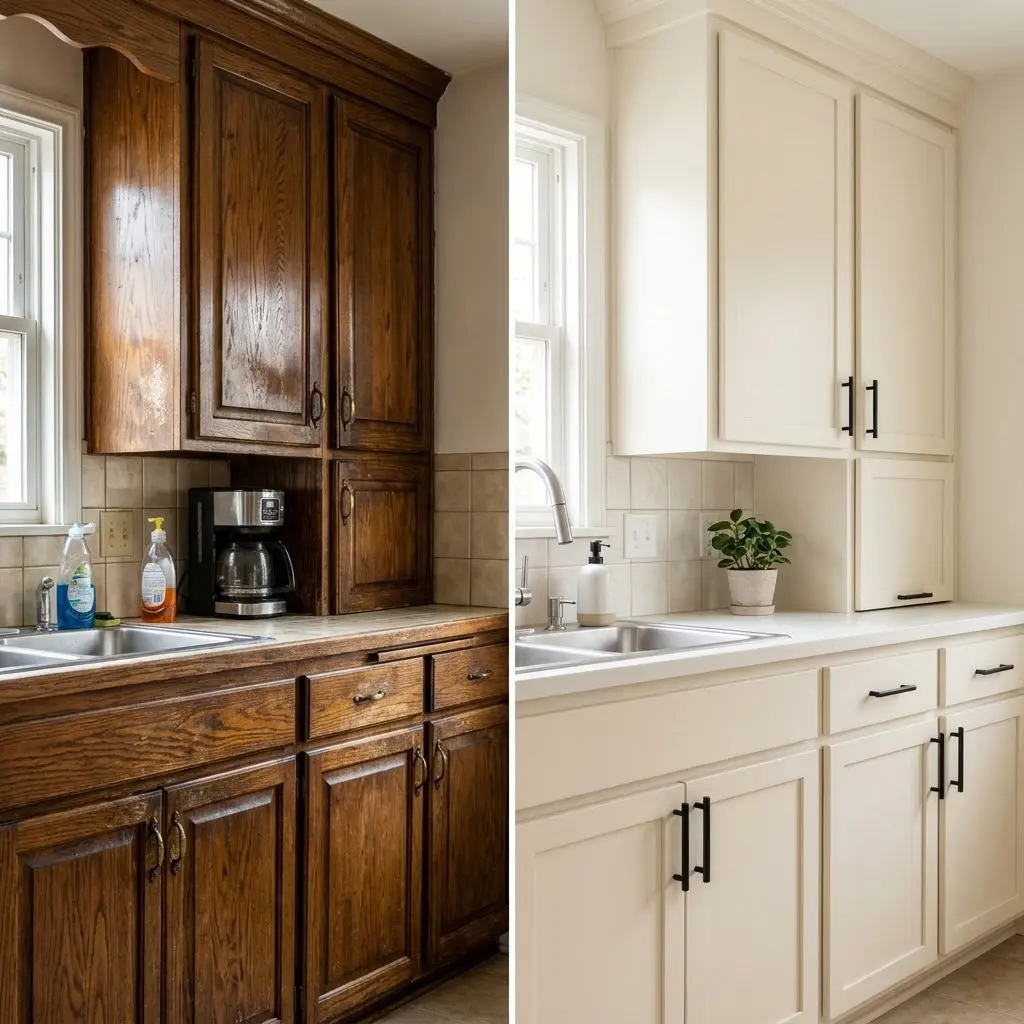
Consider a homeowner in Beaverton who wants to update an older kitchen with dark wooden cabinets. The existing finish looks dated, and the homeowner decides to repaint the doors and drawer fronts using a light neutral color.
After completing the DIY project, several problems appear. The paint begins peeling near the handles, brush marks remain visible on the doors, and some cabinet surfaces feel rough. A few doors also stick when closed because the coating has not fully cured.
The homeowner realizes that the original preparation and product selection were not sufficient for the kitchen’s daily demands.
A professional cabinet painting team evaluates the existing finish, identifies adhesion problems, and determines which surfaces need additional preparation. The cabinets are properly cleaned, sanded, and primed before specialized cabinet coatings are applied.
The updated cabinets achieve a smoother, more consistent appearance while retaining the existing cabinet structure.
This illustrative scenario demonstrates why professional expertise can make a significant difference when refreshing older kitchen cabinets.
8. Why Professional Cabinet Painting Is Better Than DIY
Although DIY cabinet painting may appear straightforward, achieving a factory-like finish requires specialized knowledge, suitable products, and consistent application techniques.
MBK Painting provides professional cabinet painting services for kitchens, bathrooms, and office spaces. The company’s approach focuses on transforming outdated or worn cabinets without the expense of completely replacing them.
Specialized Cabinet Coatings
Kitchen cabinets require coatings designed for frequent handling and everyday wear. MBK Painting uses specially ordered Renner cabinet products to achieve a durable finish rather than treating cabinetry like ordinary walls or trim.
Thorough Preparation
Proper preparation is essential for cabinet paint adhesion. Professional painters evaluate the existing surface, complete necessary sanding, and apply appropriate primers before the final coating.
Smooth and Consistent Application
Achieving a polished cabinet finish requires precision around edges, corners, recessed panels, and flat surfaces. Professional techniques help minimize streaks, uneven coverage, and visible application marks.
Less Disruption to Your Household
Painting an entire kitchen can interfere with daily routines. MBK Painting works efficiently and aims to minimize disruption while maintaining attention to detail throughout the project.
With more than 25 years of interior and exterior painting experience, the company brings professional craftsmanship to residential cabinet painting projects.
9. Is Cabinet Painting Better Than Replacing Your Cabinets?
For homeowners whose existing cabinets remain structurally sound, professional painting can provide an effective alternative to complete replacement.
Replacing cabinets involves removing existing units, selecting new cabinetry, coordinating installation, and potentially modifying other kitchen features. Cabinet painting focuses on improving the appearance of the existing surfaces.
It can be particularly beneficial when cabinet doors and frames are in good condition but have outdated colors, worn finishes, or minor cosmetic imperfections.
However, painting is not suitable for every situation. Cabinets with extensive water damage, structural deterioration, or failing materials may require repairs or replacement before refinishing can be considered.
A professional assessment helps determine whether painting is an appropriate investment for the kitchen.
FAQs About DIY Cabinet Painting
Why does DIY cabinet paint peel?
Peeling commonly occurs when cabinets are not cleaned, sanded, or primed correctly. Grease and existing finish contamination can prevent new paint from bonding properly.
Can you paint kitchen cabinets without sanding?
Some cabinet surfaces may be suitable for alternative preparation methods, but the correct approach depends on their existing finish and material. Professional evaluation helps determine the preparation required for reliable adhesion.
What paint is best for kitchen cabinets?
Cabinet-specific coatings are generally preferable because they are designed for durability and frequent handling. MBK Painting uses specialized Renner cabinet products for its cabinetry projects.
How long does professional cabinet painting last?
Longevity depends on surface preparation, coating quality, application, curing, and everyday maintenance. Properly prepared cabinets with suitable coatings can maintain an attractive finish for years.
Is professional cabinet painting worth it?
Professional cabinet painting is worthwhile when homeowners want a smooth, durable finish without replacing structurally sound cabinets. It also reduces the risk of common DIY application and preparation problems.
Give Your Portland Kitchen a Fresh Look With MBK Painting
DIY cabinet painting can quickly become frustrating when peeling, brush marks, uneven coverage, and poor adhesion affect the finished result. Professional cabinet painting addresses these challenges through careful preparation, specialized coatings, and precise application.
MBK Painting helps homeowners throughout Portland and nearby communities, including Cedar Mill, Cedar Hills, Bethany, Tigard, Beaverton, Lake Oswego, and the greater Portland Metro area.
Whether you want to modernize dark wooden cabinets, refresh worn kitchen surfaces, or create a completely different color scheme, the team can help transform your existing cabinetry with a smooth, polished finish.
Ready to update your kitchen cabinets? Call MBK Painting at (503) 773-4957 or request a quote to discuss your professional cabinet painting project.