Introduction
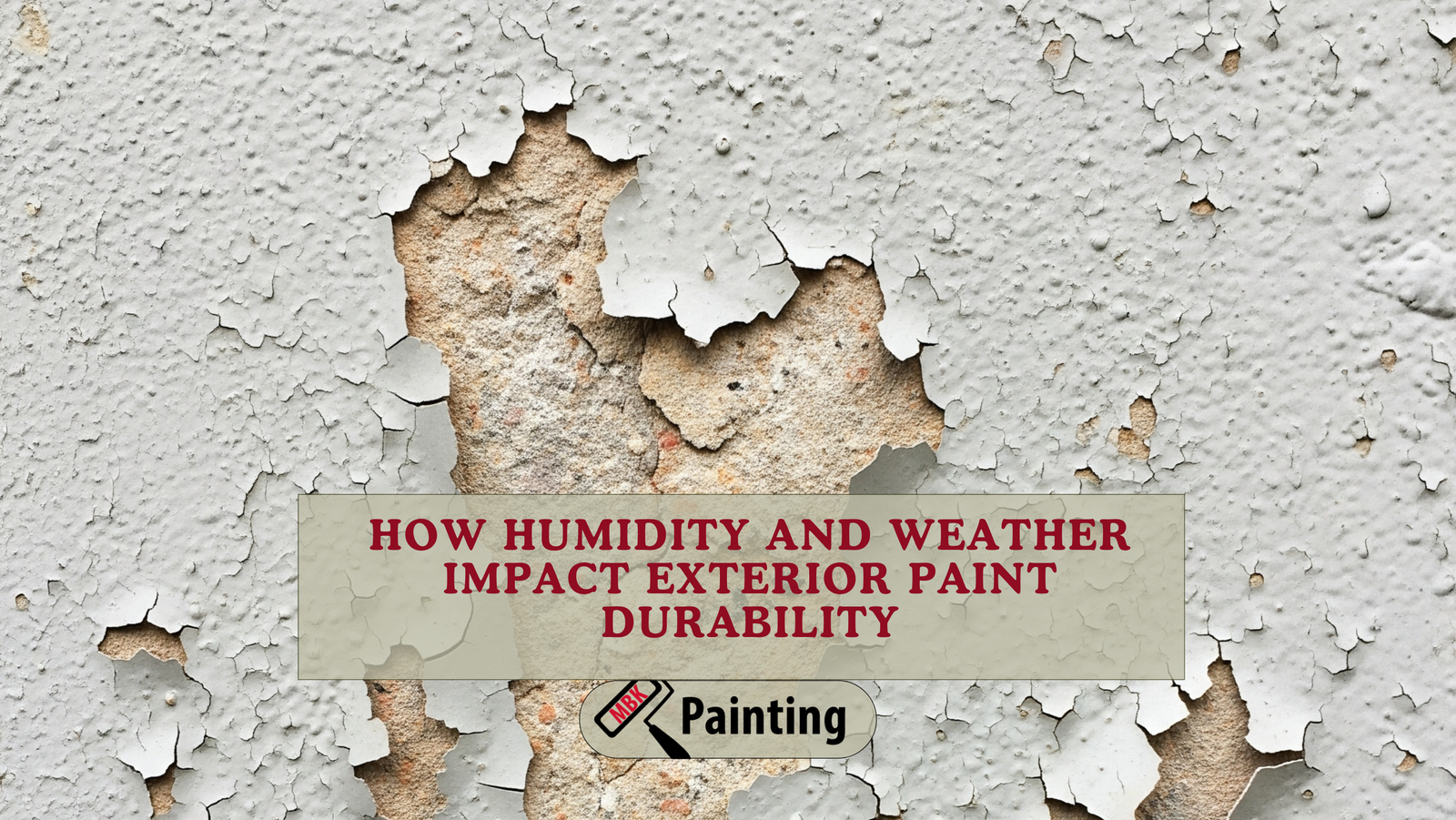
A fresh coat of exterior paint doesn’t just add curb appeal, it shields your home from rain, sun, and changing temperatures. But no matter how premium the paint, humidity and weather play a huge role in how long that new finish lasts. From steamy summers to freezing winters, climate conditions can speed up fading, cracking, and peeling.
Let’s explore how humidity and weather impact exterior paint durability and what you can do to keep your home looking great year after year.
1. High Humidity: Moisture Trapped in Paint Film
Humidity isn’t just uncomfortable, it’s tough on paint, too.
What happens:
- Moisture in the air slows paint drying and curing
- Wet paint can attract dust and mildew before it fully dries
- Trapped moisture under the paint film can cause bubbling or blistering later
Tip for painting:
Avoid painting during days with over 85% humidity or when rain is in the forecast. Early mornings and late evenings often have higher humidity than midday.
2. Rain & Snow: Persistent Moisture Challenges
Excessive rainfall or snowmelt keeps surfaces damp longer than ideal.
Effects on durability:
- Water seeps into cracks or gaps, pushing paint off wood or siding
- Repeated wet-dry cycles weaken adhesion
- Mold and mildew thrive on damp surfaces, staining or degrading paint
Solution:
Use exterior paints with mold- and mildew-resistant additives, and keep gutters clean to prevent overflow onto siding.
3. Sun Exposure: UV Damage and Fading
Constant sun exposure can be as damaging as water.
How UV rays impact paint:
- Break down paint binders, leading to chalking or powdery surfaces
- Fade bright or dark colors faster than neutrals
- Dry out the paint film, making it brittle and prone to cracking
Tip:
Choose UV-resistant exterior paints and lighter shades, which reflect sunlight better than dark colors.

4. Temperature Extremes: Expansion & Contraction
Daily and seasonal temperature swings cause building materials to expand and contract.
Impact on paint:
- Cracking along seams, joints, and trim
- Premature peeling where the paint can’t flex enough
- Heat can also make paint dry too quickly, leading to brush marks or an uneven finish
Tip:
Paint when temperatures stay between 50°F–85°F (10°C–30°C). Avoid painting in direct midday sun or freezing conditions.
5. Wind: Dust, Debris & Uneven Drying
Wind itself won’t crack paint, but it speeds up drying and carries dirt.
Problems caused:
- Dust sticks to wet paint, marring the finish
- Paint may “skin over” on the surface but remain wet underneath, trapping moisture
- Cold winds can lower surface temperature, slowing proper curing
Best practice:
Paint on calm days or use barriers to block wind if painting outdoors.
6. Climate-Specific Considerations
Your region’s climate matters when selecting and applying exterior paint.
Humid coastal areas:
- Prioritize mildew-resistant, breathable paints
- Inspect regularly for salt spray damage
Hot, dry regions:
- Use flexible, UV-resistant paints to handle intense sun
Cold, snowy climates:
- Choose paints formulated to remain elastic in low temperatures
- Avoid painting close to the first frost
7. How to Extend Your Paint’s Lifespan
Choose high-quality exterior paint designed for your local weather
Proper surface prep: clean, sand, and prime as needed
Maintain caulking and seals around windows, doors, and trim
Clean siding yearly to remove mold, dirt, and pollutants
Schedule repainting before significant peeling or cracking appears

Conclusion
Weather and humidity affect much more than comfort; they shape how long your exterior paint lasts. By choosing the right products, timing your painting days wisely, and doing regular maintenance, you can protect your home’s beauty and structure from sun, rain, and everything in between.
Investing in proper prep and climate-smart paint choices today helps keep your home looking fresh tomorrow and saves money on premature repainting. Contact us today!